For laboratory research use only. Not for human consumption.

For laboratory research use only. Not for human consumption.
Welcome back! Please enter your details.
Cognitive Compounds
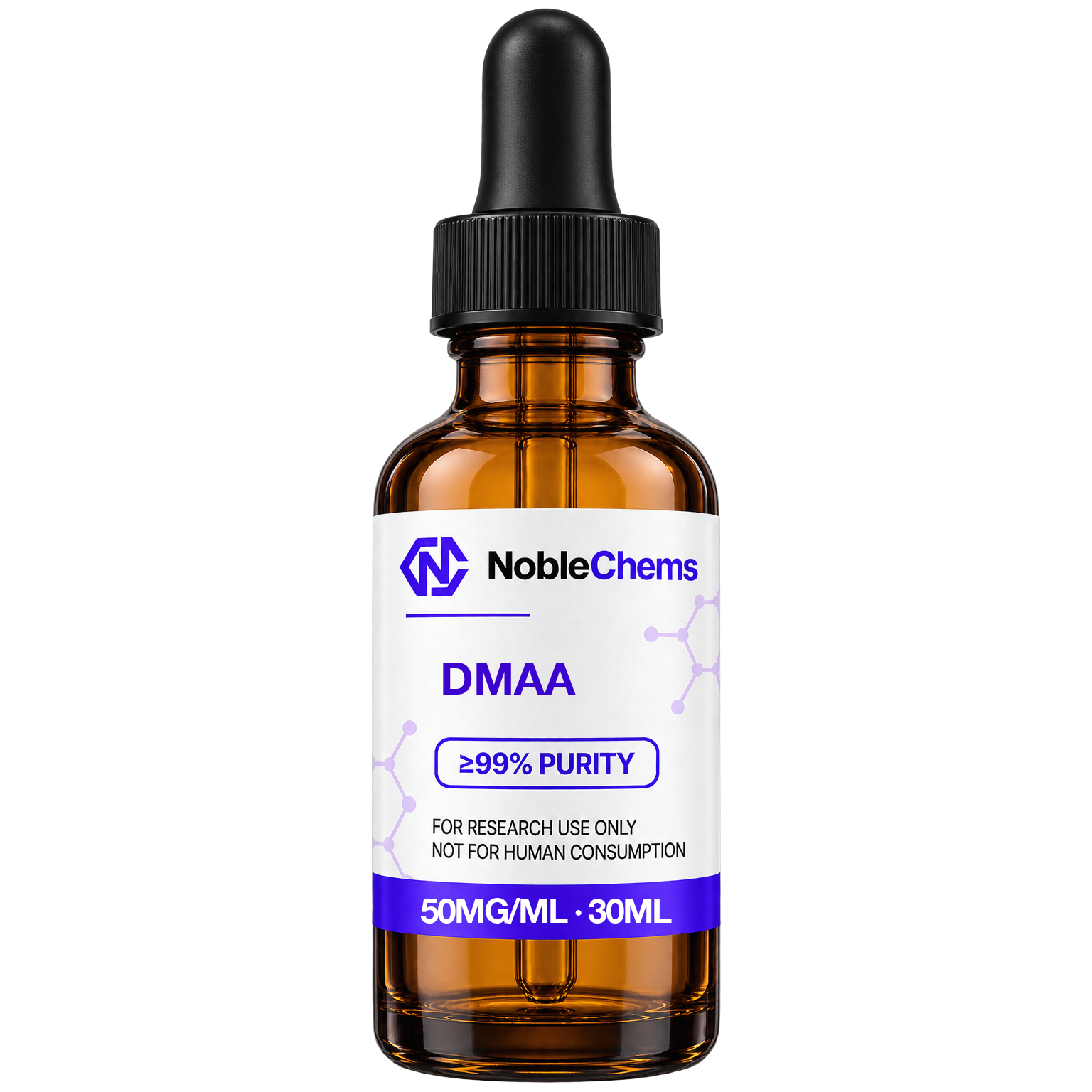
DMAA (1,3-dimethylamylamine / Methylhexanamine) is a synthetic aliphatic alkylamine research compound featuring potent sympathomimetic activity. Operating as an indirect adrenergic receptor agonist, DMAA modulates norepinephrine and dopamine transporter dynamics while inducing vasoconstrictive responses in vascular smooth myocyte assays.
In Stock
Secure Checkout
Encrypted & Safe
Batch Tested
Verified Quality
Fast Shipping
Discreet Delivery
DMAA (known chemically as 1,3-dimethylamylamine, Methylhexanamine, Forthane, or 4-methylhexan-2-amine) is a simple aliphatic alkylamine compound featuring a six-carbon branched chain structure. Originally developed in the 1940s as a synthetic nasal vasoconstrictor, DMAA functions as an indirect sympathomimetic agent that mimics catecholamine activity within cellular and vascular tissue models. Unlike aromatic amphetamine derivatives, DMAA lacks a central benzene ring, operating primarily through aliphatic adrenergic receptor engagement and central monoamine transporter inhibition.
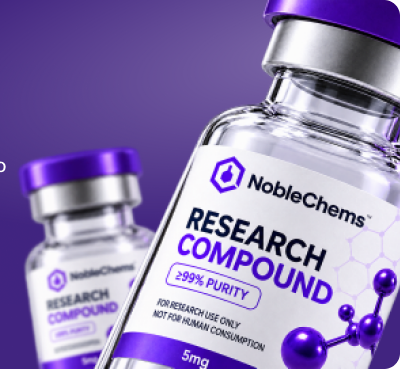
Formulated and analytical batch-tested for NobleChems, DMAA is supplied as a high-purity reference aqueous solution with a concentration of 50MG/mL for laboratory screening. Researchers investigating catecholamine release, alpha-adrenergic signaling, and comparative monoaminergic pathways frequently utilize DMAA alongside alternative neuro-chemical reference standards. For instance, evaluating Fladrafinil’s allows laboratories to contrast selective central DAT inhibition against the peripheral adrenergic vasopressor cascades characteristic of aliphatic alkylamines.
| Compound Name | DMAA (1,3-Dimethylamylamine) |
|---|---|
| Format & Packaging | Analytical-Grade Reference Powder / Sealed Glass Reagent Vial |
| Synonyms / Alt Names | Methylhexanamine, 1,3-DMAA, 4-methylhexan-2-amine, Forthane, Geranamine |
| CAS Number | 105-41-9 (Free Base) 13803-74-2 (HCl Salt) |
| Chemical Formula | C7H17N |
| Molecular Weight | 115.22 g/mol |
| IUPAC Name | 4-methylhexan-2-amine |
| InChIKey | SQGYOAMRGKWBAC-UHFFFAOYSA-N |
| SMILES Code | CCC(C)CC(C)N |
The biochemical pathways and cellular targets of DMAA in laboratory research include:
Indirect Sympathomimetic Catecholamine Release: Research demonstrates that DMAA acts as a substrate for presynaptic monoamine transporters, facilitating the localized release of endogenous norepinephrine (noradrenaline) into synaptic cleft models. This indirect sympathomimetic mechanism triggers downstream adrenergic cascade signaling in isolated tissue preparations.
Alpha-1 and Alpha-2 Adrenergic Receptor Engagement: In vascular smooth muscle assays, DMAA exhibits affinity for alpha-1 (α1) and alpha-2 (α2) adrenergic receptors. Receptor binding stimulates intracellular calcium mobilization, resulting in marked vasoconstriction and elevated perfusion pressure in isolated organ tissue models.
Norepinephrine & Dopamine Transporter (NET / DAT) Reuptake Inhibition: In vitro radioligand binding assays confirm that DMAA weakly inhibits the reuptake of norepinephrine and dopamine via human monoamine transporters. This dual action extends synaptic neurotransmitter residence times in neuronal cell culture assays.
When evaluating research efficacy and published scientific literature for DMAA (1,3-dimethylamylamine):
Sympathomimetic & Vascular Pharmacodynamics: Classical and modern pharmacological studies cataloged in ScienceDirect evaluate the pressor responses and receptor kinetics of aliphatic alkylamines. Experimental data demonstrate that 4-methylhexan-2-amine produces dose-dependent vascular smooth muscle contraction and transient elevations in vascular resistance in animal tissue assays.
Chemical Profiling & Mass Spectrometry Data: Official structural characterization cataloged on PubChem documents the nuclear magnetic resonance (NMR) spectrum, gas chromatography-mass spectrometry (GC-MS) fragmentation patterns, and salt solubility parameters of 1,3-dimethylamylamine for analytical reference verification.
Comparative Monoamine Transporter Binding Assays: Competitive binding studies in cell lines expressing recombinant human NET and DAT receptors confirm that while DMAA exhibits sympathomimetic activity, its affinity for monoamine transporters is significantly lower than that of classical catecholaminergic compounds, operating primarily via indirect displaced release mechanics.
To evaluate chemical structures, sympathomimetic potency, and monoamine selectivity, researchers compare DMAA against alternative central nervous system modulators and nootropic reference compounds available at NobleChems:
| Compound / Reference | Chemical Class | Core Mechanism of Action | Research Focus & Profile |
|---|---|---|---|
| DMAA (1,3-Dimethylamylamine) | Aliphatic Alkylamine | Indirect norepinephrine release, alpha-adrenergic stimulation, and weak NET/DAT inhibition | Focuses on peripheral vascular vasoconstriction, adrenergic signaling, and sympathomimetic tissue assays |
| Fladrafinil | Bis-Fluorinated Modafinil Analog | Selective dopamine transporter (DAT) inhibition and central histamine elevation | Focuses on targeted central wakefulness and cognitive alertness; provides a balanced monoaminergic model without acute peripheral adrenergic vasoconstriction |
| Phenylpiracetam Hydrazide | Phenylated Racetam Derivative | Modulates nicotinic acetylcholine receptors (nAChRs) and inhibits DAT reuptake | Focuses on rapid central cognitive stimulation, acetylcholine pathway sensitivity, and physical cold-resistance models |
| Bromantane | Adamantane Actoprotector | Upregulates Tyrosine Hydroxylase (TH) gene expression to drive de novo dopamine synthesis | Focuses on non-depleting dopamine production, physical endurance, and non-sedating GABAergic anxiolysis |
DMAA (1,3-dimethylamylamine / 4-methylhexan-2-amine) is an aliphatic alkylamine. Unlike aromatic central nervous system stimulants, DMAA possesses a saturated seven-carbon branched alkyl chain with an amine group at position 2, lacking any phenyl or aromatic ring structures.
DMAA operates primarily as an indirect sympathomimetic agent. In presynaptic nerve terminal models, it promotes the displacement and release of stored norepinephrine into the synaptic cleft, where the neurotransmitter activates postsynaptic alpha-1 and alpha-2 adrenergic receptors.
DMAA hydrochloride salt is readily soluble in polar solvents, including water, ethanol, and dimethyl sulfoxide (DMSO). For cell culture or tissue bath assays, reference solutions should be freshly prepared using sterile laboratory buffers or ultra-pure water to ensure exact concentration accuracy.
DMAA is an aliphatic sympathomimetic that causes pronounced peripheral vascular smooth muscle contraction via adrenergic release. In contrast, Fladrafinil is a centrally selective dopamine reuptake inhibitor that modulates wakefulness pathways without inducing acute peripheral vasopressor spikes.
DMAA provided by NobleChems is strictly for laboratory, in vitro, and analytical research use only (RUO). It is not for human or animal consumption. Reagent vials should be stored tightly sealed in a cool, dry environment (15°C to 25°C) protected from humidity and heat.
All products listed on this site are sold strictly for laboratory research use only. They are not drugs, foods, cosmetics, or medical devices, and must not be misbranded, misused, or mislabelled as such.
Products are not intended for human or veterinary consumption, diagnosis, treatment, or prevention of any condition. Purchasers confirm they are qualified researchers or institutions and accept full responsibility for safe handling, storage, and lawful use.
Every batch is independently tested and its certificate of analysis published against the lot number printed on the vial.

Free Shipping
On orders over $199

24/7 Support
We’re here to help

Independent Testing
Every batch tested

Secure Checkout
Safe & encrypted
STAY UPDATED
Know when something’s back in stock before it sells out, and when new COAs are posted.