For laboratory research use only. Not for human consumption.

For laboratory research use only. Not for human consumption.
Welcome back! Please enter your details.
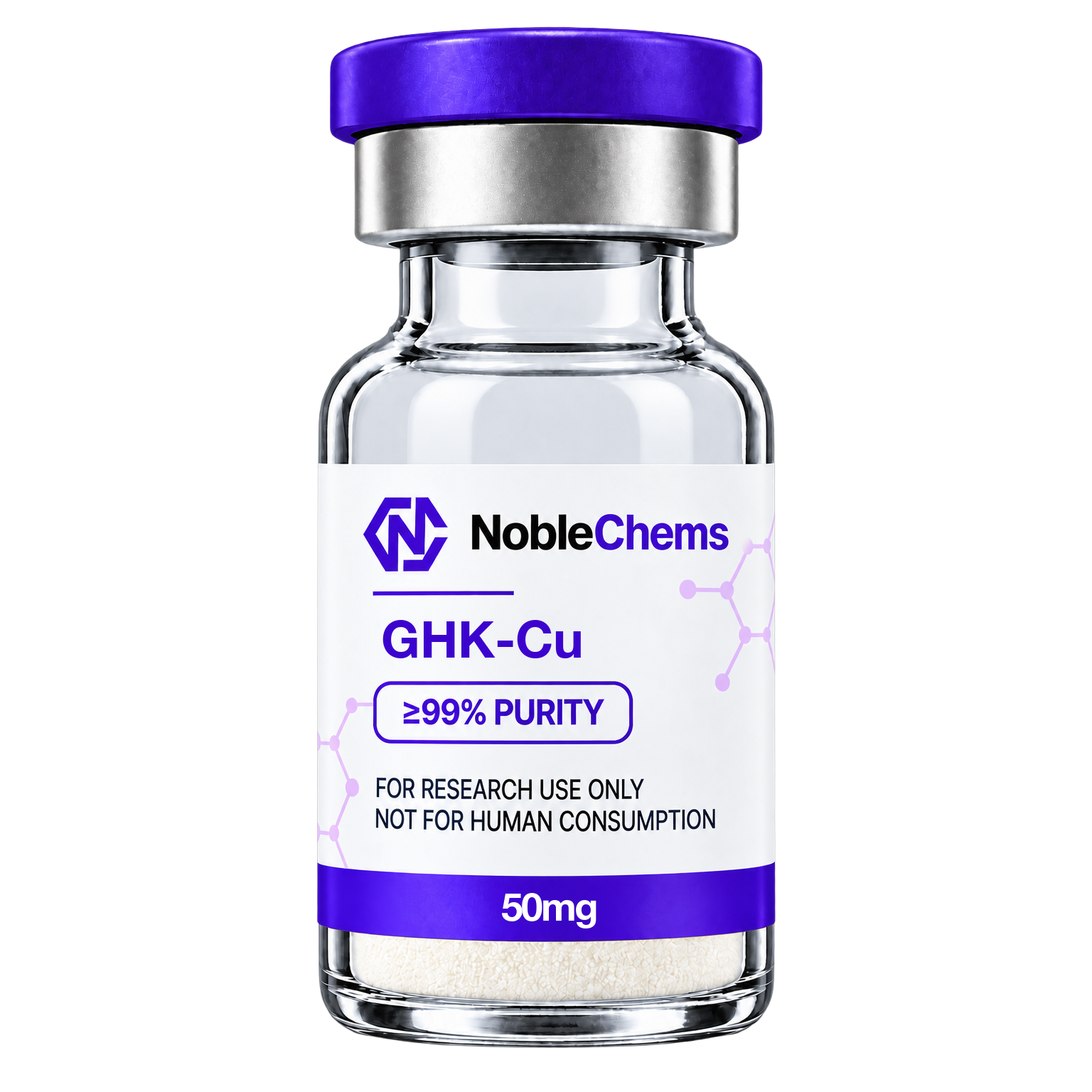
Best Sellers · Lyophilized 100MG / 2mg Dry-Fill / Lyophilized 50MG
GHK-Cu (Glycyl-L-histidyl-L-lysine copper complex) is a naturally occurring copper-binding signal tripeptide engineered for extracellular matrix (ECM) remodeling, gene expression regulation, and cellular tissue repair research. Targeted delivery of copper(II) ions directly to target cells, GHK-Cu upregulates collagen type I and III synthesis, modulates matrix metalloproteinase (MMP) enzymatic activity, and stimulates endogenous antioxidant gene pathways in cell culture models.
Select Size
In Stock
Secure Checkout
Encrypted & Safe
Batch Tested
Verified Quality
Fast Shipping
Discreet Delivery
| Quantity | Price / Unit | You Saved |
|---|---|---|
| 1 – 3 | $42.00 | — |
| 4 – 6 | $38.72 | 7.8% |
| 7 – 9 | $36.08 | 14.1% |
| 10+ | $32.17 | 23.4% |
Price breaks are applied automatically in cart.
$43.20
$51.00
$8.00
GHK-Cu (known chemically as Glycyl-L-histidyl-L-lysine copper complex or Copper Tripeptide-1) is a naturally occurring plasma tripeptide with a high binding affinity for copper(II) ions. Originally identified in human serum, GHK-Cu serves as a vital signal peptide that regulates extracellular matrix (ECM) remodeling, promotes fibroblast proliferation, and resets gene expression toward regenerative and antioxidant pathways.
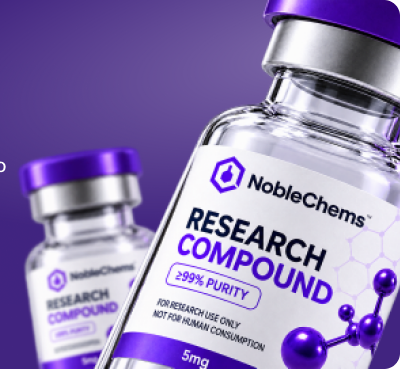
Batch-verified for high analytical purity at NobleChems, GHK-Cu is supplied in three versatile laboratory formats:
50MG high-density lyophilized reference powder sealed in a 2R (3ML) glass vial
100MG high-density lyophilized reference powder sealed in a 2R (3ML) glass vial
2MG dry-fill solid oral capsules (60 units per bottle)
Researchers studying cell-matrix interactions, enzymatic tissue remodeling, and genomic responses utilize GHK-Cu for the remodeling of the extracellular matrix and modulates anti-inflammatory cytokines along with KPV and Glutathione.
| Compound Name | GHK-Cu (Glycyl-L-Histidyl-L-Lysine Copper Complex) |
|---|---|
| Quantity / Formats Offered | 50MG and 100MG Lyophilized Powder (2R Vial) 2MG Dry-Fill Capsules (60 Units per Bottle) |
| Peptide Sequence | Gly-His-Lys:Cu2+ |
| Synonyms / Alt Names | Copper Tripeptide-1, GHK Copper Complex, Glycyl-Histidylate-Lysine Copper |
| CAS Number | 49557-75-7 |
| Chemical Formula | C14H22CuN6O4 |
| Molecular Weight | 405.90 g/mol |
| IUPAC Name | copper(2+);2-[[2-[(2-aminoacetyl)amino]-3-(1H-imidazol-5-yl)propanoyl]amino]-6-aminohexanoate |
| InChIKey | JXZAOBWUGMXXS-UHFFFAOYSA-N |
| SMILES Code | C(CCN)CC(C(=O)O)NC(=O)C(CC1=CN=CN1)NC(=O)CN.[Cu+2] |
The biochemical pathways and cellular targets of GHK-Cu in laboratory research include:
Extracellular Matrix (ECM) Synthesis & Remodeling: GHK-Cu acts as a primary signal for dermal and connective tissue fibroblasts, stimulating transcription of collagen type I, collagen type III, elastin, and glycosaminoglycans (GAGs). It regulates matrix metalloproteinase (MMP-1, MMP-2) enzymes and their inhibitors (TIMP-1, TIMP-2), facilitating clean matrix turnover.
Gene Expression & Genomic Modulation: Microarray gene expression studies demonstrate that GHK-Cu alters transcription across over 4,000 genes. It upregulates DNA repair pathways, trophic factors, and anti-inflammatory cytokine cascades while downregulating pro-apoptotic and inflammatory cytokine genes.
Copper Transport & Antioxidant Enzyme Activation: GHK-Cu functions as a high-affinity carrier that delivers essential copper(II) ions to copper-dependent enzymes, including Cu/Zn Superoxide Dismutase (SOD1) and lysyl oxidase (LOX). This enhances intracellular free-radical scavenging and supports enzymatic collagen/elastin cross-linking.
When evaluating research efficacy and published scientific literature for GHK-Cu (Copper Tripeptide-1):
Gene Expression Resetting & Regenerative Kinetics: Comprehensive genomic analyses archived on PMC (PMC6073405) document GHK-Cu’s capacity to modulate gene expression networks, upregulating antioxidant enzymes and extra-cellular matrix activation pathways while downregulating pro-inflammatory cytokines in cellular models.
Cellular Repair Mechanisms & Fibroblast Function: Peer-reviewed research cataloged on PubMed (PMID: 25584147) highlights GHK-Cu’s role in chemo-attracting macrophages and capillary endothelial cells, driving accelerated keratinocyte migration and extracellular matrix assembly in vitro.
Chemical Profiling & Structure Verification: Official structural characterization maintained on PubChem verifies the molecular mass (405.90 g/mol), copper chelation geometry, and analytical retention parameters of CAS 49557-75-7.
To evaluate structural matrix remodeling, anti-inflammatory properties, and cellular pathways, researchers compare GHK-Cu against alternative reference standards available at NobleChems:
| Compound / Reference | Chemical Class & Structure | Core Mechanism of Action | Research Focus & Profile |
|---|---|---|---|
| GHK-Cu | Copper-Chelated Signal Tripeptide (Gly-His-Lys:Cu2+) | Upregulates collagen I/III, elastin, and GAG synthesis while modulating MMP/TIMP enzymatic matrix balance | Focuses on extracellular matrix (ECM) remodeling, fibroblast migration, copper transport, and genomic gene expression resetting |
| Pentadecapeptide Arginate (PDA) | Synthetic Gastric Pentadecapeptide Arginate | Activates VEGFR2, promotes focal adhesion kinase (FAK) signaling, and accelerates angiogenesis; bound to Arginate reduces the effects of first-pass metabolic degradation | Focuses on mucosal integrity, and microvascular sprouting through growth factor signaling. |
| KPV | α-MSH C-Terminal Tripeptide (Lys-Pro-Val) | Inhibits nuclear factor kappa B (NF-κB) nuclear translocation to block pro-inflammatory cytokines | Focuses strictly on targeted cellular anti-inflammation, mucosal barrier protection, and acute cytokine dampening |
| Glutathione | Endogenous Tripeptide Antioxidant (GSH) | Acts as a cofactor for glutathione peroxidase (GPx) to neutralize hydrogen peroxide and reactive oxygen species | Focuses on systemic cellular redox balance, heavy metal chelation, and hepatic detoxification pathways |
Yes, NobleChems is a highly trusted vendor for high-purity research chemicals, peptides, and copper complexes. Every batch of GHK-Cu undergoes strict third-party analytical testing (including HPLC and Mass Spectrometry) to verify minimum 98%+ purity, correct copper chelation stoichiometry, and complete absence of unreacted peptide fragments or heavy metal impurities.
GHK-Cu is a small signal tripeptide (Glycyl-L-histidyl-L-lysine) chelated to a divalent copper ion. The nitrogen atoms on the histidine imidazole ring and glycine amine backbone coordinate with Cu with extremely high binding affinity, forming a stable bioavailable chelate complex.
In fibroblast cell cultures, GHK-Cu upregulates mRNA expression for collagen types I and III, elastin, and decorin. Additionally, it regulates matrix metalloproteinases (MMPs), ensuring balanced degradation of damaged structural proteins alongside newly synthesized matrix assembly.
Genome-wide expression profiling shows that GHK-Cu alters the transcription of over 4,000 human genes. It upregulates DNA repair enzymes and antioxidant pathways—such as Cu/Zn Superoxide Dismutase (SOD1)—while downregulating pro-inflammatory cytokine signaling.
NobleChems provides GHK-Cu in three standardized formats: a 50MG and 100MG high-density lyophilized reference powder in a 2R (3ML) glass vial and pre-measured 2MG dry-fill solid oral capsules (60 units per bottle). Both formats deliver consistent active material purity for in vitro screening protocols.
GHK-Cu is a copper-binding tripeptide that focuses primarily on extracellular matrix remodeling, collagen I/III synthesis, and gene expression resetting. Pentadecapeptide Arginate is a synthetic gastric pentadecapeptide that acts through VEGFR2 activation, focal adhesion kinase (FAK) signaling, and vascular endothelial growth factor pathways.
The GHK tripeptide acts as a specific carrier designed to transport copper ions across biological membranes. Copper is an essential cofactor for enzymes like lysyl oxidase (which cross-links collagen and elastin) and superoxide dismutase (SOD1), making chelation necessary for full biological efficacy.
Lyophilized GHK-Cu vials and capsule containers should be stored tightly sealed in a cool, dry environment (15°C to 25°C) or frozen (-20°C) for long-term preservation. Once transformed into an aqueous solution with a sterile laboratory buffer, an aqueous GHK-Cu solution should be kept refrigerated (2°C to 8°C) and protected from direct light exposure.
All products listed on this site are sold strictly for laboratory research use only. They are not drugs, foods, cosmetics, or medical devices, and must not be misbranded, misused, or mislabelled as such.
Products are not intended for human or veterinary consumption, diagnosis, treatment, or prevention of any condition. Purchasers confirm they are qualified researchers or institutions and accept full responsibility for safe handling, storage, and lawful use.
Every batch is independently tested and its certificate of analysis published against the lot number printed on the vial.

Free Shipping
On orders over $199

24/7 Support
We’re here to help

Independent Testing
Every batch tested

Secure Checkout
Safe & encrypted
STAY UPDATED
Know when something’s back in stock before it sells out, and when new COAs are posted.